Table of contents
It starts as a small routine, then becomes a calendar anchor. In 2026, as wellness spending keeps climbing and more city workers treat recovery like a line item, the “spa regular” is no longer a niche character, but a consumer profile with habits, data trails, and clear expectations. What does that look like in real life, from the first click to the last loyalty point? Follow one typical day, where menu choices meet membership math, and where downtime is planned with the same care as a meeting.
Morning booking: the menu already decides
Who picks a treatment at random? Regulars rarely do, because their choices are shaped by a mix of physiology, past results, and the subtle economics of packages, peak-hour pricing, and monthly budgets. In practice, the day often begins on a phone screen, where the first decision is not “massage or facial,” but “what problem am I solving today,” tight hips after a week of commuting, a stiff neck from hours at a laptop, or a face that looks as tired as it feels after short nights and air-conditioned offices.
The menu, for frequent clients, reads like a personal dashboard. Deep tissue is booked when training volume rises; lighter Swedish techniques appear before travel days; lymphatic-style sessions re-enter the rotation after long-haul flights or during high-stress periods. Facials, too, follow patterns: a hydrating option after winter heating, a brightening session before an event, or a massage-focused facial when tension sits in the jaw and temples. Many regulars now research techniques before choosing, and some compare protocols between venues, looking for a clear explanation of pressure, sequence, and expected sensation rather than vague promises.
That “pre-booking” moment is also where the modern spa economy shows through. Even without naming any one business model, the mechanics are consistent across the sector: off-peak slots can be cheaper, subscription-like plans make repeat visits easier to justify, and add-ons, scalp treatments, targeted serums, longer durations, quietly push the ticket upward. Industry watchers have tracked this drift toward higher per-visit spending; in the United States, the International Spa Association reported average revenue per visit rising year over year in its 2024 industry study, reflecting both price increases and guests opting for longer or bundled services.
For facial massage specifically, regulars tend to look for craft and clarity. If a client wants to understand what facial massage involves, how it differs from device-led facials, and what kinds of techniques are commonly offered, resources like maison-ysae.com can help structure that choice, because the key is not the trend label, but the method, the practitioner’s approach, and the goal: relaxation, drainage, tone, or simply making the face feel less “locked.”
Midday check-in: the regular knows the drill
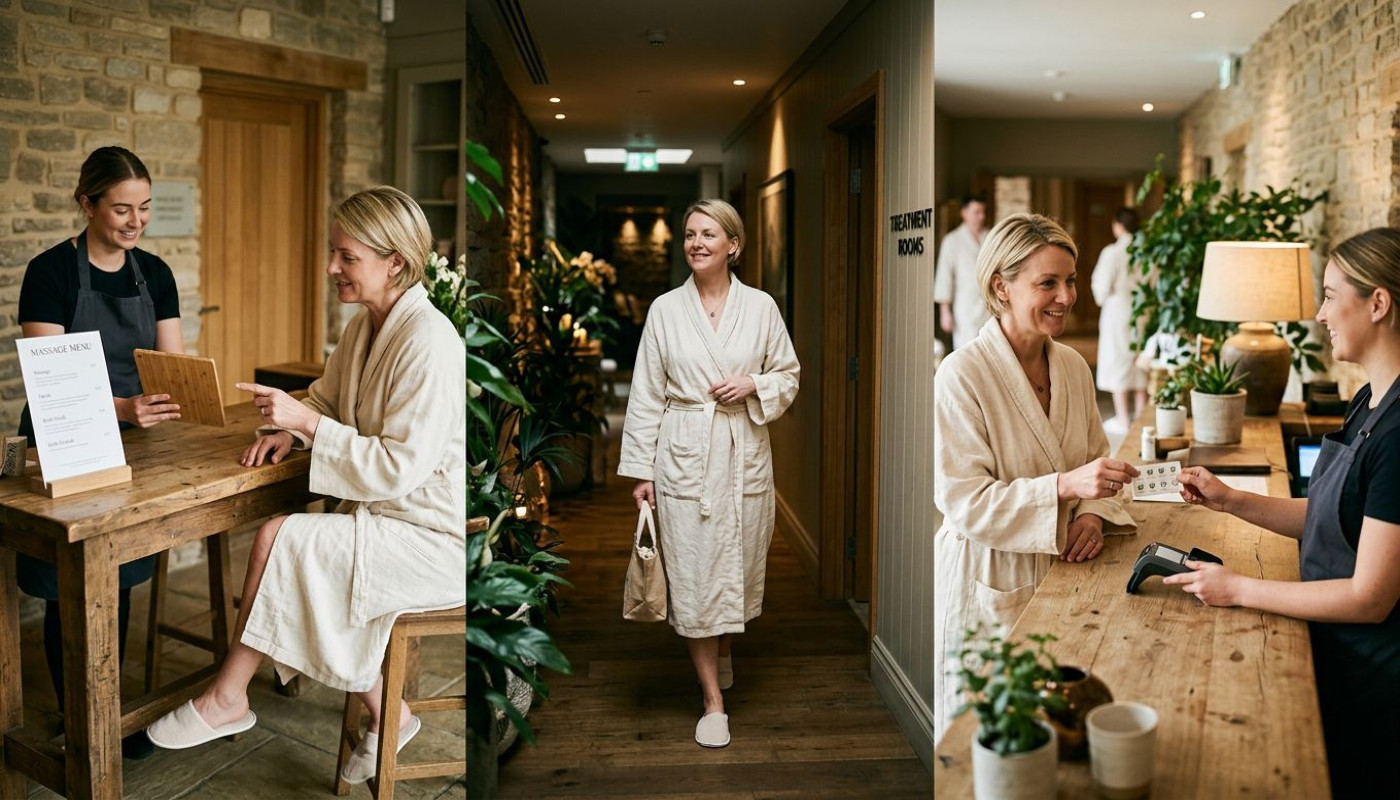
Front desks see it instantly: regulars arrive differently. They show up early enough to avoid rushing, they already know whether they prefer quiet or conversation, and they tend to have a stable set of preferences, room temperature, music volume, pressure level, fragrance sensitivity, and whether post-treatment time is a must or a luxury. This isn’t entitlement; it’s habit built from repetition, and it actually makes service smoother, because fewer minutes are spent negotiating basics and more are spent addressing what changed since last time.
That “what changed” has become more important as wellness routines intersect with increasingly quantified lives. Many clients track sleep, steps, heart rate variability, or training load, and they come in with hypotheses: “My jaw clenches when work peaks,” “My shoulders lock after two days of video calls,” “My skin dehydrates when I travel.” Even if a spa does not position itself as medical, the regular’s mindset often resembles the way people manage a gym program, adjust inputs, observe outputs, then repeat. The session begins with a short conversation, but in experienced hands it is not small talk; it is triage, and it sets expectations about what can realistically change in one hour.
The wider industry has leaned into this preference-driven experience. Globally, wellness continues to expand as a consumer category; the Global Wellness Institute estimated the wellness economy at about $6.3 trillion in 2023, and projected continued growth through the mid-2020s, with personal care and beauty, and wellness tourism, among the fastest-moving segments. That macro growth filters down into micro behaviors: more locations offer online intake forms, more front desks remember details through CRM notes, and loyalty programs reward frequency, not just spend.
Yet regulars remain skeptical of marketing fluff. They care about basics done well: punctuality, cleanliness, consistent technique, and practitioners who can explain what they are doing. Trust, once earned, becomes the real “membership benefit,” because it removes decision fatigue. The client stops shopping around each month, the spa gains predictability, and the relationship becomes a routine that can survive price increases better than one-off visits can.
On the table: time slows, technique speaks
This is the moment the regular pays for: an hour where the body stops negotiating with the day. The phone is away, the lights soften, and the practitioner’s hands become the main communication channel. For frequent clients, the value is not only in relaxation, but in the specificity of sensation, where pressure, rhythm, and sequencing can be adjusted to match what the client’s tissues are “saying” that week. One session may prioritize deep, targeted work; another may focus on calming the nervous system, because recovery is not always about intensity.
Massage choices often mirror life cycles. During heavy workloads, clients report more neck and shoulder complaints; during travel seasons, legs and lower backs get attention; during colder months, longer sessions can feel more justifiable. Some people alternate modalities: a sports-focused approach after a race, then a gentler session a week later to sustain mobility without overstimulation. Research into massage suggests why this matters: studies have linked massage to short-term reductions in pain and anxiety in various contexts, and while outcomes vary by technique and individual, the repeatability of “feeling better afterward” is what keeps regulars returning.
Facial massage, increasingly, is treated as more than a cosmetic add-on. Regulars who carry tension in the jaw, forehead, and temples often describe it as the missing piece, because stress patterns do not stop at the neck. The experience can sit somewhere between skincare and bodywork, with attention to pressure points, circulation, and relaxation. The key difference from many device-heavy facials is the centrality of touch, and for some clients that tactile focus is precisely what helps them disengage from screens and speed.
In a business sense, this is also where the “menu” quietly proves itself. A well-designed offering makes it easy to understand duration, intention, and expected intensity; it avoids mystery pricing and reduces the awkwardness of mid-session upselling. Regulars, more than anyone, notice consistency, because they have a baseline for comparison. If the technique changes without explanation, or if the experience becomes rushed, they feel it immediately, and loyalty points will not fix that.
Afterwards: loyalty points, real costs, smarter routines
When does relaxation end? For the regular, it often continues at the payment terminal, because loyalty systems and packages turn wellness into a small personal finance exercise. Points, tiers, birthday perks, discounted add-ons, member-only hours, and pre-paid bundles are designed to encourage frequency, and they work best on people who already come often. The psychology is simple: the next visit feels closer, and the price feels more manageable when it is framed as “maintaining” rather than “splurging.”
But savvy regulars do the math. They know how many visits they can realistically make, whether blackout dates or peak pricing will limit them, and whether unused credits expire. Some prefer straightforward pay-per-visit pricing for flexibility; others like bundles that lower the per-session cost and reduce decision fatigue. In many cities, rising living costs have made these calculations sharper, and the “regular” category now includes people who come less often but plan more carefully, choosing one longer session instead of two shorter ones, or combining one body treatment with a shorter facial massage rather than booking two separate appointments.
They also build routines outside the spa, because the best loyalty program is still the one that makes the body feel better between visits. Hydration, gentle stretching, sleep, reduced screen strain, and even small changes like adjusting a chair or carrying a lighter bag can extend the effect of bodywork. Regulars learn, sometimes the hard way, that a single session cannot compensate for weeks of the same trigger. The spa becomes part of a broader system: recovery plus habits, not recovery instead of habits.
Finally, there is the cultural shift. Once, a spa visit could feel like a rare indulgence; now it is increasingly framed as maintenance, and that framing changes behavior. Regulars book earlier, protect the time in their calendar, and treat consistency as the real luxury. The loyalty program, in that sense, is just a structure around a deeper idea: if you return often enough, you stop chasing miracles and start measuring small, steady improvements.
Planning your next visit without overspending
Book off-peak when possible, and ask about bundles before you commit to a tier. Set a monthly budget, then choose duration and add-ons accordingly, because longer sessions cost more than most people estimate. Check whether local programs or insurers offer wellness reimbursements, and reserve your next slot before leaving to lock in your routine.
Similar articles

The Psychological Impact Of Sports Injuries On Elite Athletes

Exploring Methods To Emotionally Connect With Deceased Pets

How does Bioguard protect products?
